
From Research Assistant to Post-Doctoral Research Fellow, applying immunology to ECMO research
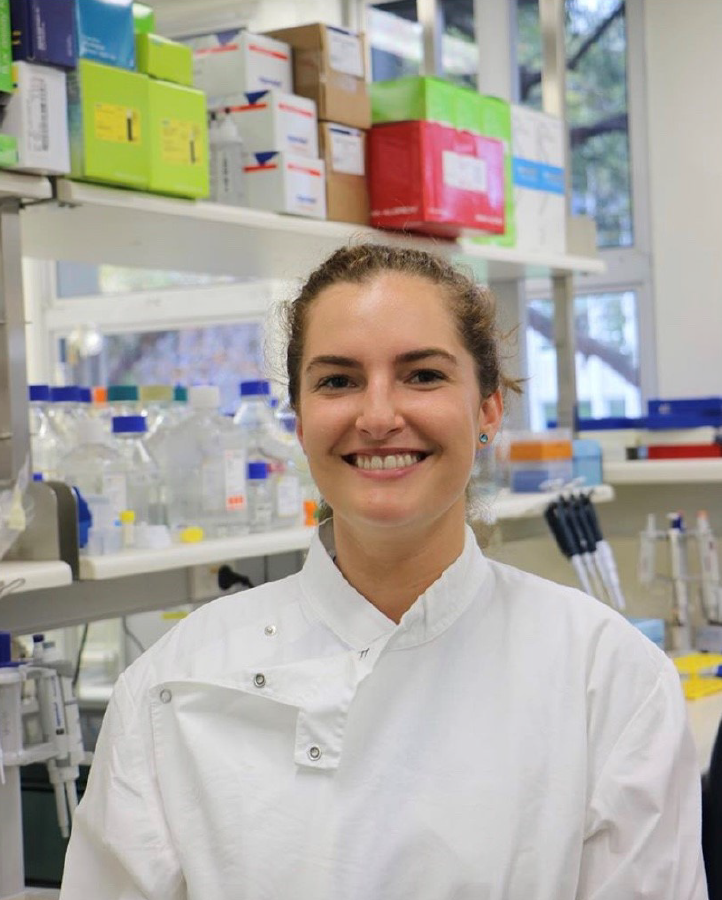
In 2017, CCRG Post-Doctoral Research Fellow Dr Sandra Parker moved to Australia from New Zealand to pursue her research in immunology, neuroscience, pharmacology and biomedical sciences. After joining the group in 2024, Sandra narrowed her focus working on CCRG’s ECMO research stream within the Scientific and Translational Research Laboratory (STARLab).
Sandra’s interest in physiology first led her to study a Bachelor of Science in Neuroscience at the University of Otago in Dunedin, moving to Brisbane shortly after to work as a Research Assistant at The University of Queensland School of Biomedical Sciences (UQSBMS).
“My first Research Assistant role was with SBMS, where I worked on preclinical models of Amyotrophic Lateral Sclerosis (ALS), a neurodegenerative disease that affects nerve cells in the brain and spinal cord, leading to progressive muscle weakness. The lab had a strong pharmacology and immunology focus, targeting immune system processes to reduce inflammation in the brain and nerves,” Sandra explains.
“I completed my PhD at UQ studying how the immune system affects how brain cells communicate with each other. In particular, I focused on a part of the immune system called the complement system, and how one of its receptors (C5aR1) can influence brain activity and signalling.”
Sandra was inspired to join CCRG, drawn by the group’s approach to multidisciplinary collaboration, emphasis on improving outcomes and clear link to clinical outcomes, something that was lacking in her previous roles.
“Bringing a scientific background to STARLab helps support our clinicians by providing technical breakdown of processes. When developing preclinical models for research projects, I can help in grouping and measuring to quantify the model itself and the specific data points.”
CCRG’s ECMO research is crucial due to the high mortality rate of patients and subsequent issues involved with the device itself.
“My hope is that we develop a better understanding of what happens to the immune system during ECMO. Then we can hopefully work to reduce the foreign nature of ECMO treatment, perhaps by making the typical tubes used less bio-reactive to reduce the need for extra precautionary drugs,” explains Sandra.
Away from her research, Sandra loves exploring the beaches of Queensland and the East Coast, with her favourite spots being Burleigh Heads and Byron Bay.