-

Professor John Fraser AO
Founder and Director, Critical Care Research Group
Co-Founder, ICU of the Future
-

A/Prof Jacky Suen
Lead, STARLab
-

Dr Oystein Tronstad
Project Manager, ICU of the Future
Lead, Clinical Research
ICU of the Future 미래의 중환자실
Patient Centred Design to Optimise Recovery 환자 중심 설계로 최적의 회복을 위한 환자 중심 설계
The Critical Care Research Group’s ICU of the Future is redesigning the environments in ICUs to be more patient-centric and recovery focused.
ICUs can be daunting places for patients and their families with up to 75 per cent of patients globally experiencing anxiety, depression, or other physical, cognitive, or psychological problems.
Recovering from critical illness can have devastating long-term side effects on a survivor’s mental & physical wellbeing, and that of their families.
1 in 2 Australians will be exposed to an ICU in their lives, either as a patient or as a support person
Up to 25 per cent of patients will experience ICU Delirium, a type of acute brain failure, during admission
75 per cent of ICU patients develop PTSD, anxiety, depression or other conditions as a result of the ICU environment
Many ICU survivors do not return to full time employment
50 per cent of families of ICU survivors make major adjustments to living circumstances such as moving home, delaying education or losing their savings to support a loved one
The Critical Care Research Group is investigating all aspects of the ICU experience to ensure patients not only survive ICU… but THRIVE when they return home.
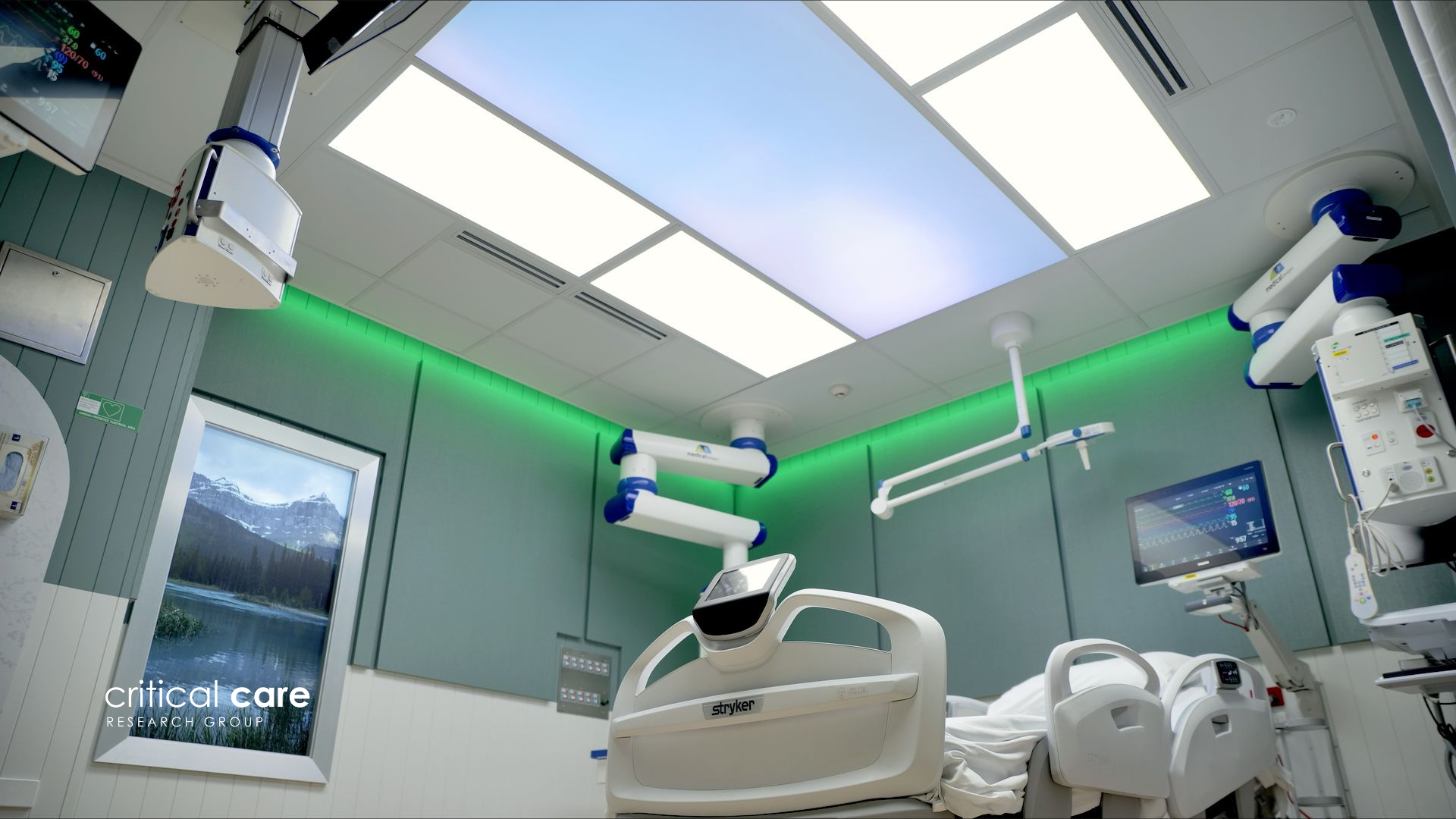

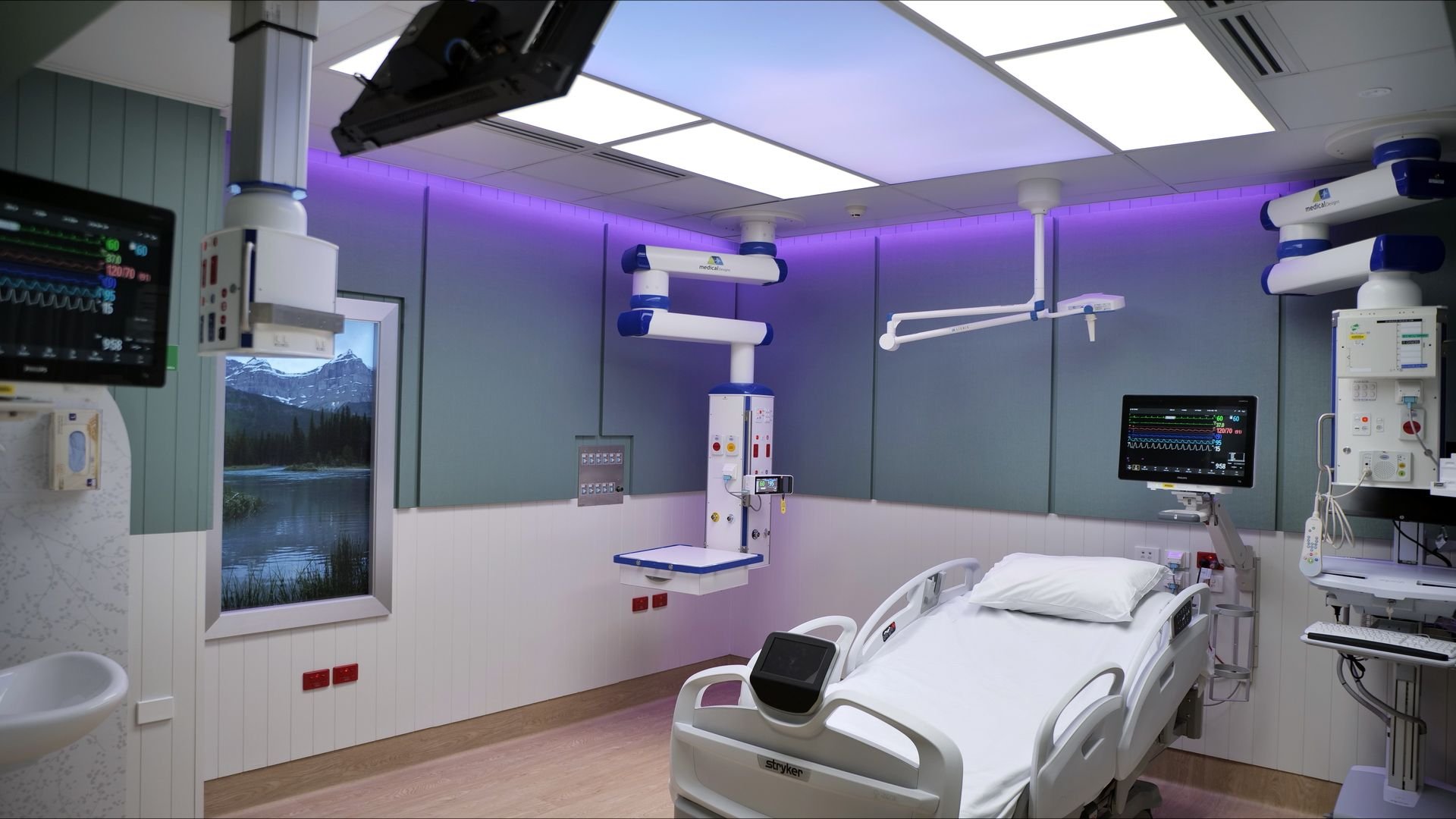
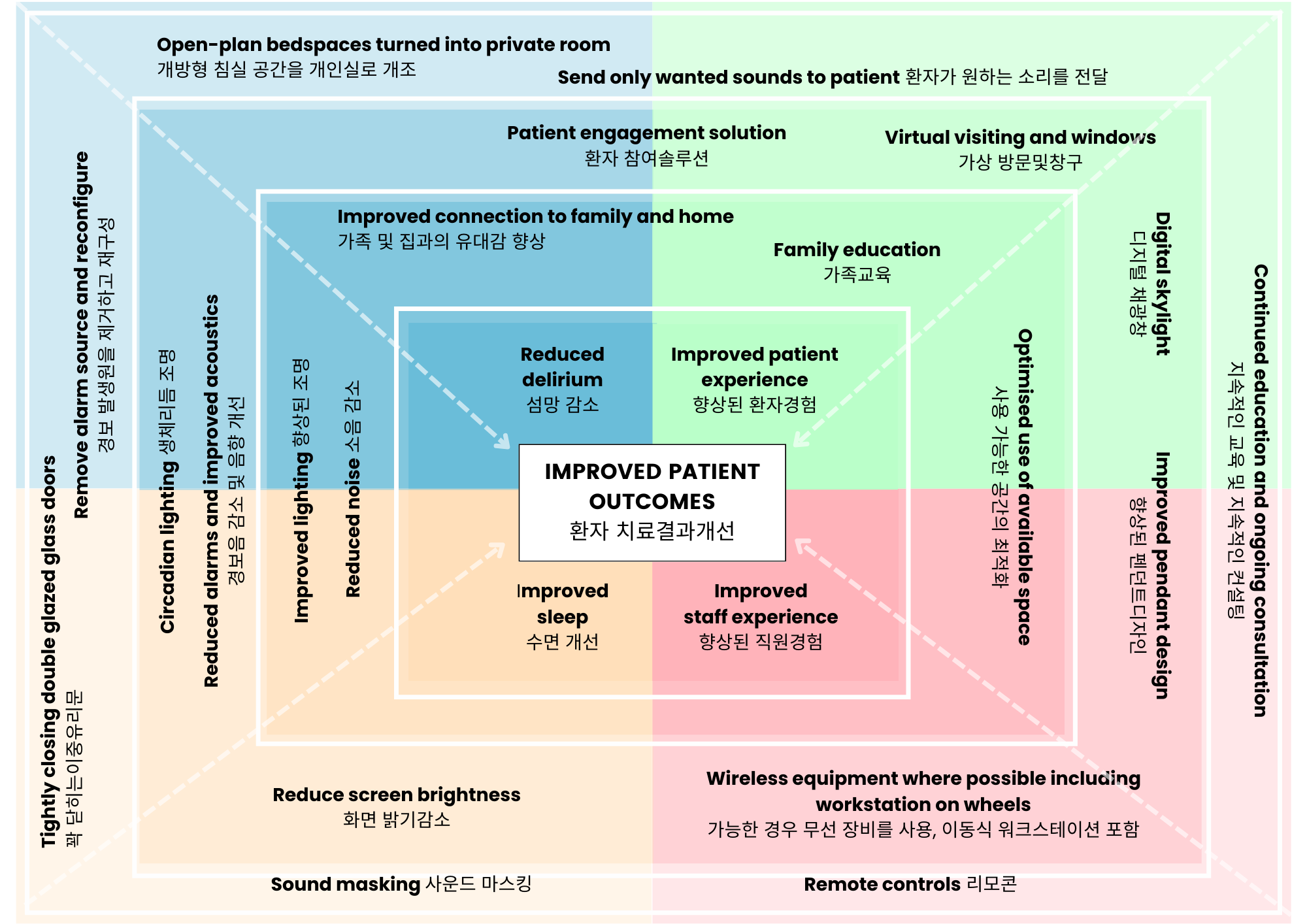
What makes the ICU of the Future different?
To deliver a new ICU environment that puts patients at the core, it was critical that we engaged past patients and their families.
Our goal was to deeply understand their experiences, their challenges, and the physical and sensory factors that are linked to long-term patient problems such as PTSD, anxiety, depression, and other psychological complications commonly seen after an ICU admission.
This revolution in ICU design will allow patients to rest and recover in a quiet, peaceful environment, whilst remaining connected to friends and family through innovative technology.
Right: Architect’s impression of the new bed spaces at The Prince Charles Hospital, the leading cardiothoracic hospital in Australia.

Select ICU of the Future publications
-
![Empty rooftop deck with flooring preparations, brick walls, windows, and safety railing]()
Prototype Showcase
Step behind the scenes and see the building of the world-first ICU of the Future prototype
-
![]()
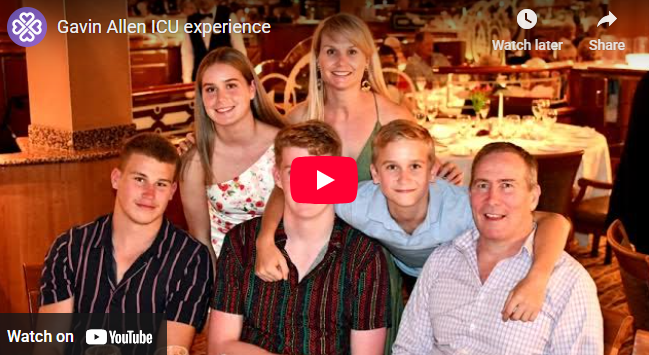
Gavin Allen's ICU Experience
Former Australian Rugby League player, Gavin Allen, spent three weeks in the ICU following a life-saving heart transplant.
While he is incredibly grateful for the care he received, he said he was as “terrified at times” during his stay in the ICU.
-
![ICU of the future]()
Designed by community
The ICU of the Future aims to fundamentally redesign the ICU environment to improve survival rates, the recovery experience and quality of life beyond the hospital.
-
![]()
Welcome to the ICU of the Future
Past-Patients, clinicians, donors, scientists and researchers came together to celebrate the opening of the new ICU of the Future bed spaces, the result of years of stakeholder engagement, development, and design to ensure patients not only survive… but THRIVE after ICU.


Other Critical Care Research Group initiatives
-
![Biomedical Engineering
The Innovative Cardiovascular Engineering and Technology Laboratory (ICETLab) facilitates the translation of innovative cardiovascular technologies from idea to clinical implementation, whilst also investigating the clinical ch]()
ICETLab
Cardiovascular technologies from idea to implementation.
-
![The Living Heart Project]()
The Living Heart Project
Mending broken hearts with Hypothermic Ex-Vivo Perfusion
-
![Research Translation
Our Scientific and Translational Research Laboratory (STARLab) focuses on heart, lungs and extracorporeal membrane oxygenation (ECMO) research. In particular, projects involve heart transplant (HTx), lung transplant, heart failur]()
STARLab
Imperative research related to the heart, lungs and ECMO.
-
![CCRG]()
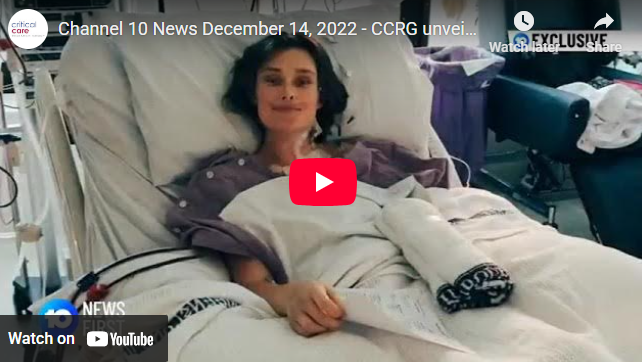
ICUs can be scary
Hear patient Rhys’ first hand experience
-
![Collage of numerous participants in a virtual meeting, with flags of various countries in the background, centered around the COVID-19 Critical Care Consortium logo.]()
COVID-19 Critical Care Consortium
A global collaboration born out of a global crisis.
-
![Preclinical
The Preclinical Innovative Medical and Engineering Laboratory (PRIMELab) is Australia’s largest research facility testing the efficacy and safety of new medical and surgical interventions that are set to be implemented into clinical pract]()
PRIMELab
Australia’s largest preclinical ICU
-
![]()
CCRG Fellowship Programme
Expressions of interest now open to join the Critical Care Research Group