
Meet the clinicians driving CCRG’s pulsatile ECMO research
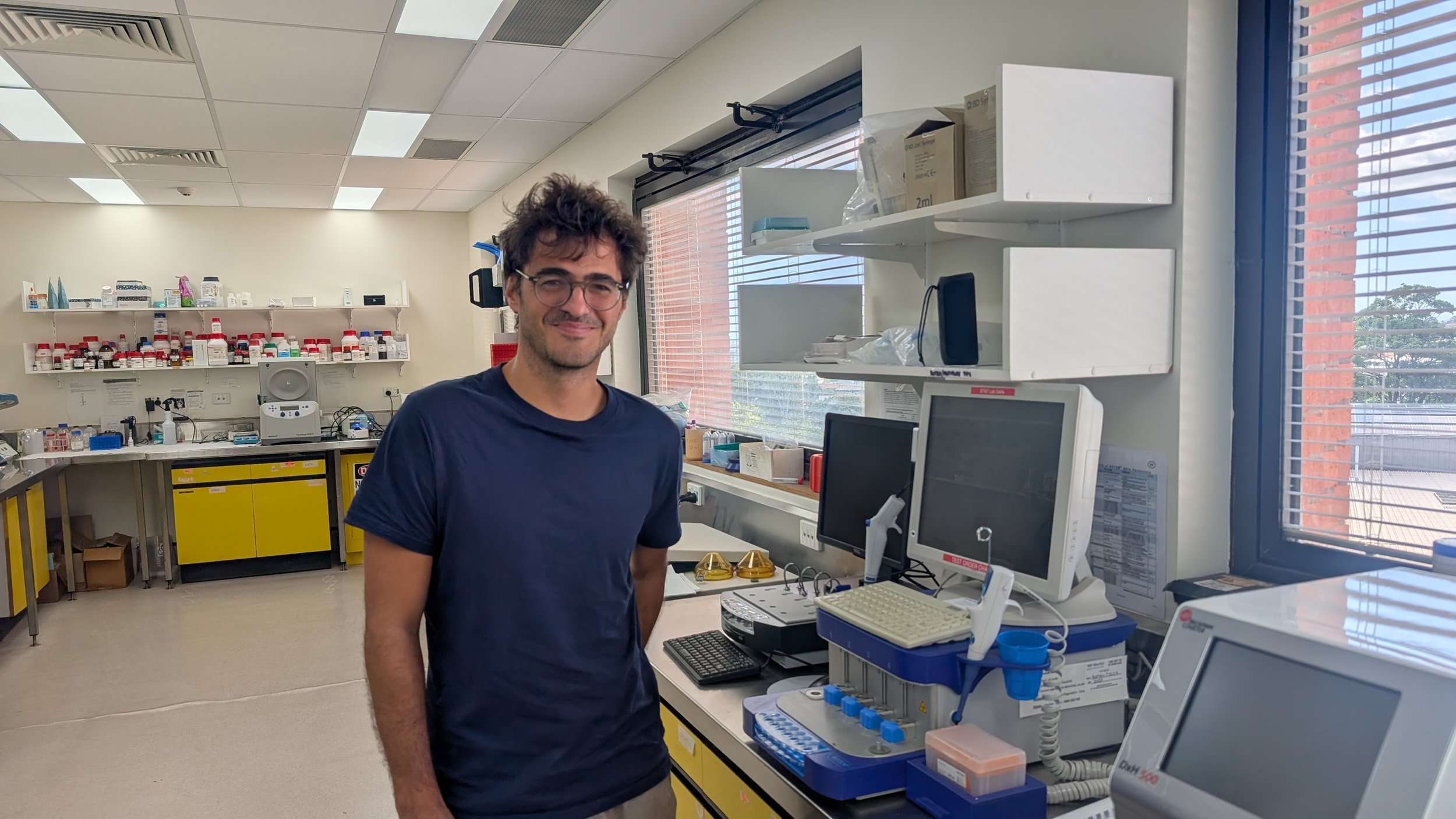
Before moving to Australia to join CCRG’s Preclinical Innovative Medical and Engineering Laboratory (PRIMELab), Dr Quentin Moyon trained and worked in Paris at Pitié-Salpêtrière Hospital, one of Europe’s largest tertiary referral centres.
Quentin is one of six recipients of the 2025 PhD Scholarships awarded by The Prince Charles Hospital Foundation. His project will investigate the benefits of pulsatile VA ECMO in a preclinical model of cardiogenic shock.
“I am extremely grateful for the support. This scholarship allows me to fully dedicate myself to the research and to join an outstanding team at CCRG. None of this work would be possible without the generosity of The Prince Charles Hospital Foundation and its donor community, and I truly appreciate their commitment to advancing critical care research,” said Quentin.
Before joining CCRG, Quentin completed his Masters in Statistics at Université Paris-Saclay and undertook his medical doctorate in internal medicine and intensive care medicine at Sorbonne University.
Quentin’s move to Australia is the result of a long-standing collaboration between the CCRG and the intensive care teams at Pitié-Salpêtrière Hospital, led by Professor Alain Combes. This collaboration provided the foundation for his PhD at The University of Queensland, which focuses on extracorporeal membrane oxygenation (ECMO).
“ECMO is a life-saving technology whose use has increased nearly twenty-fold worldwide over the past 15 years. However, despite this expansion, outcomes remain burdened by high morbidity and mortality in the most severe patients,” Quentin explains.
One potential limitation of conventional ECMO is that blood is returned to the body in a continuous, non-physiological manner, which may increase the workload of an already failing heart. Quentin’s PhD focuses on the development and evaluation of a pulsatile form of ECMO designed to better mimic the natural heartbeat.
“The goal is not simply to add pulsatility, but to determine whether a more physiological flow pattern can reduce cardiac stress and improve blood delivery to vital organs.”
With PRIMELab, Quentin is involved in a randomised preclinical study using CCRG’s advanced preclinical model of cardiogenic shock which includes a 48-hour follow-up period, allowing detailed assessment of the physiological effects of each strategy.
“The primary outcome of the study is the microcirculation — the flow of blood through the smallest vessels that deliver oxygen directly to tissues. In simple terms, organs can fail even when large blood vessels appear adequately perfused if blood does not effectively reach these microscopic networks,” explains Quentin.
To address this, the experiments rely on an exceptionally comprehensive monitoring strategy. Advanced imaging techniques are used to visualise microvessels in real time, while metabolic and oxygen sensors assess how well tissues are supplied with and use oxygen. Combined with detailed haemodynamic monitoring, this approach provides an integrated view of organ perfusion and function.
“This level of monitoring allows us to move beyond simple pressure or flow measurements,” Quentin notes, “and to better understand how different ECMO strategies affect organ function at a tissue level.”
Outside the laboratory, Quentin has settled in Brisbane with his partner and their three-year-old son. As a family, they are enjoying discovering Australian life, from local beaches to playgrounds, alongside the demands of clinical and research work.